— Level Design —
The Estate
Summary
A level inspired by Bioshock, with emphasis on player agency and choice.
Having recently found out who the person behind a large crime syndicate is, you are tasked with infiltrating their estate and disposing of them, and hopefully getting out of there alive.
The player have the option of stealth or combat, where the level design allows for both approaches.
After disposing of the leader, the player will need to fight their way out of the estate, with increasing amount of enemies to get through.
Breakdown
- Created in 3 weeks (half time)
- Made in Unreal 5.6.1
- Based off of a previous assignment
- Template is made by me
Goal
- Create a level with different paths, allowing for multiple playstyles
- Utilize all of the systems and features in my self-made Bioshock-inspired template
— Overview —
Level Layout
Objectives
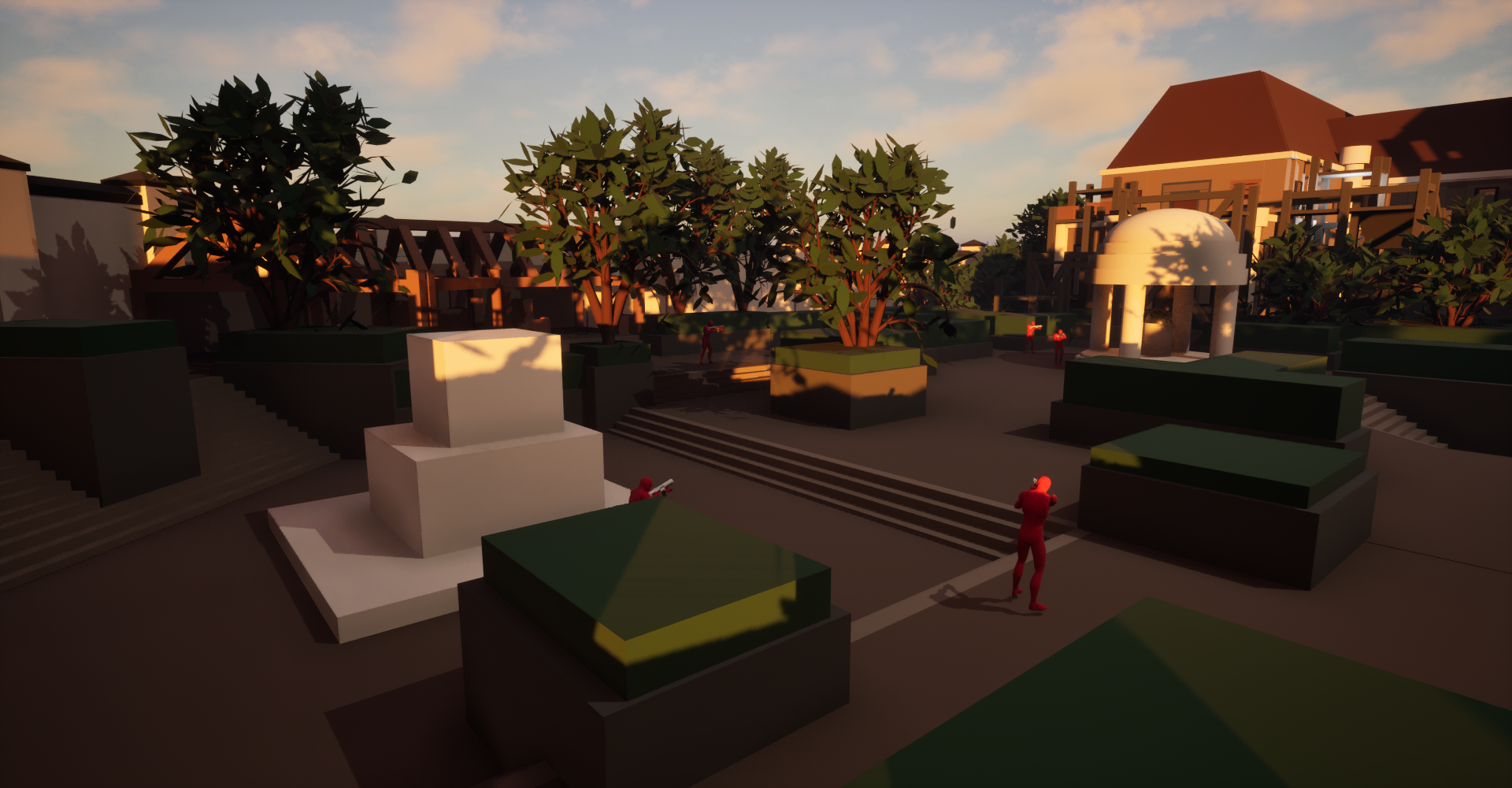
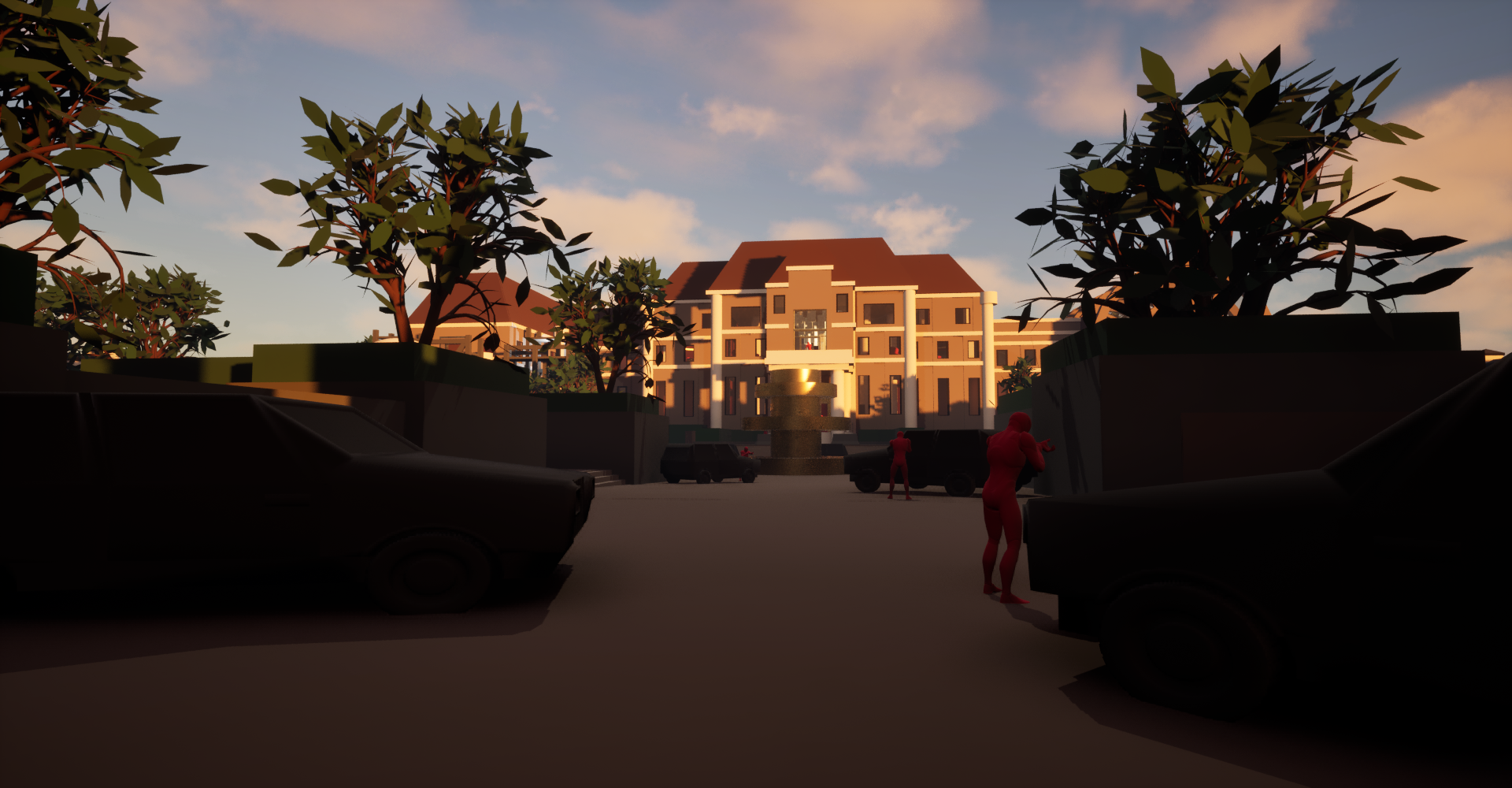
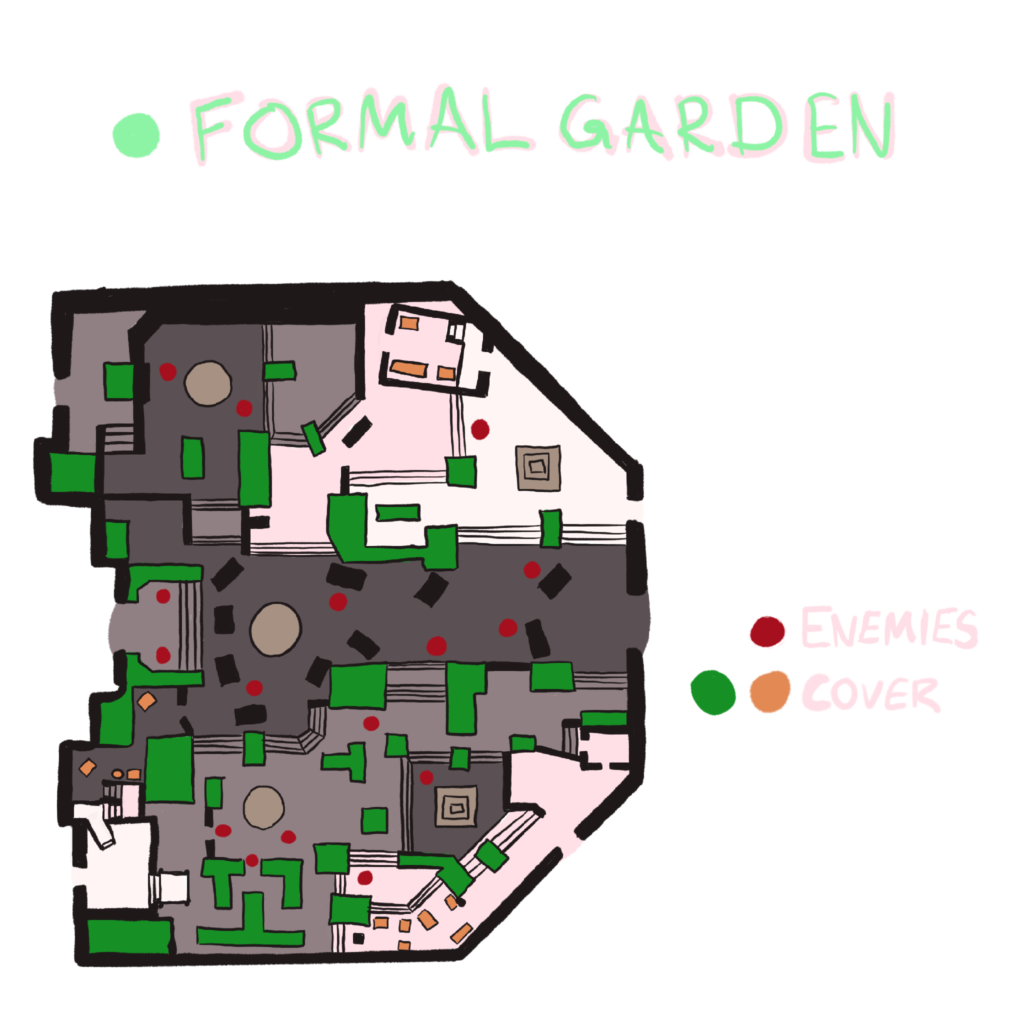
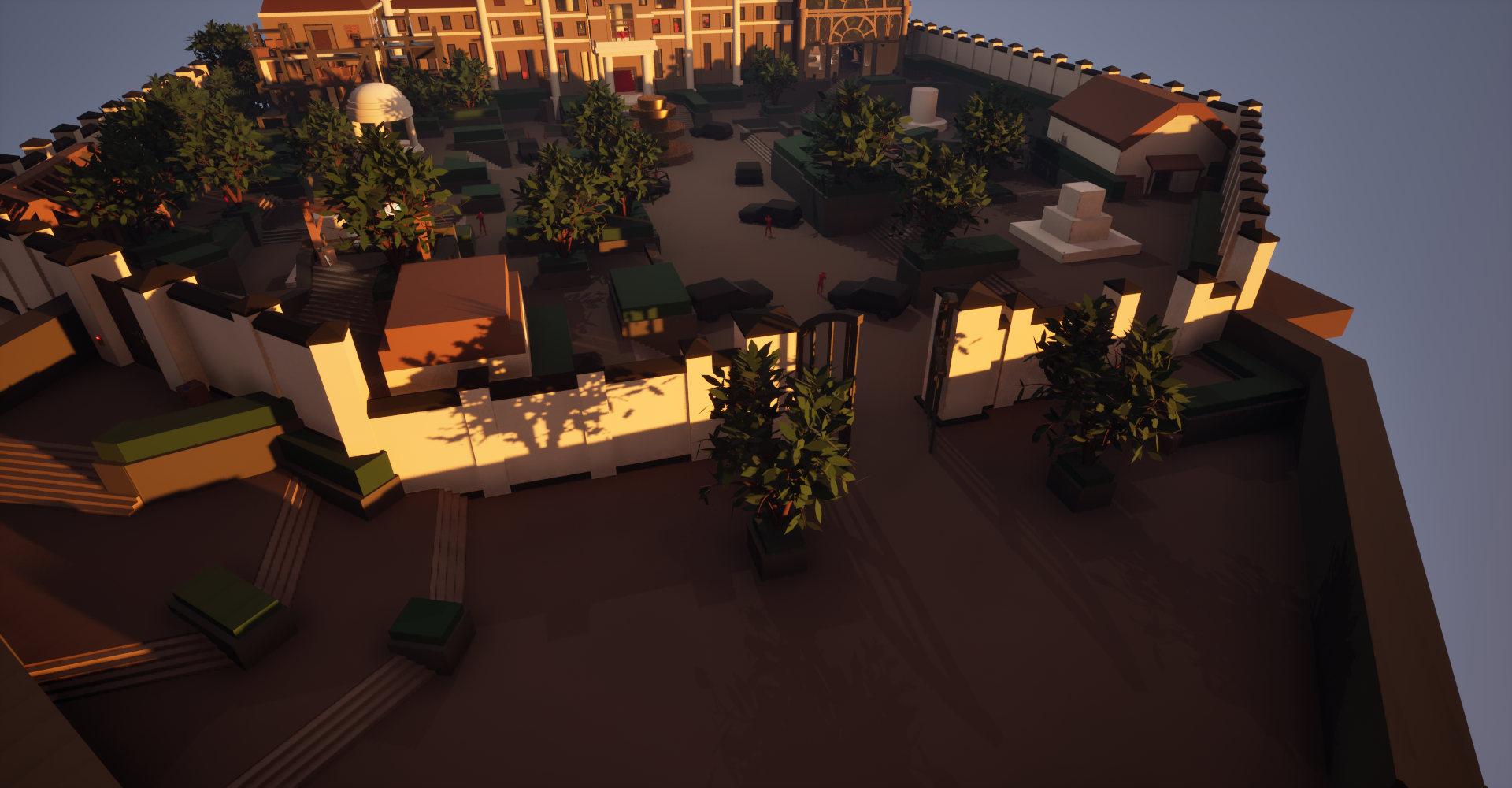
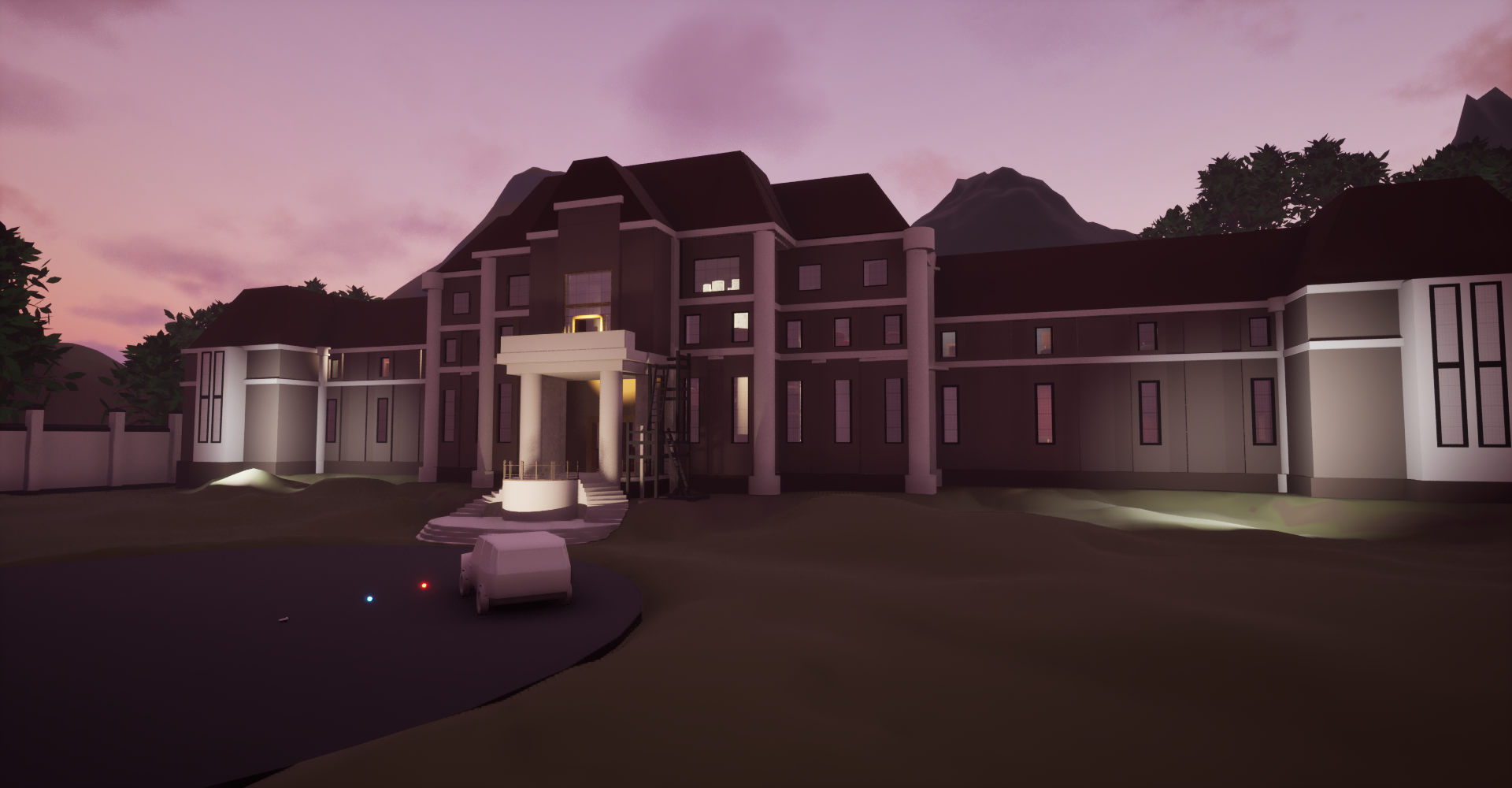
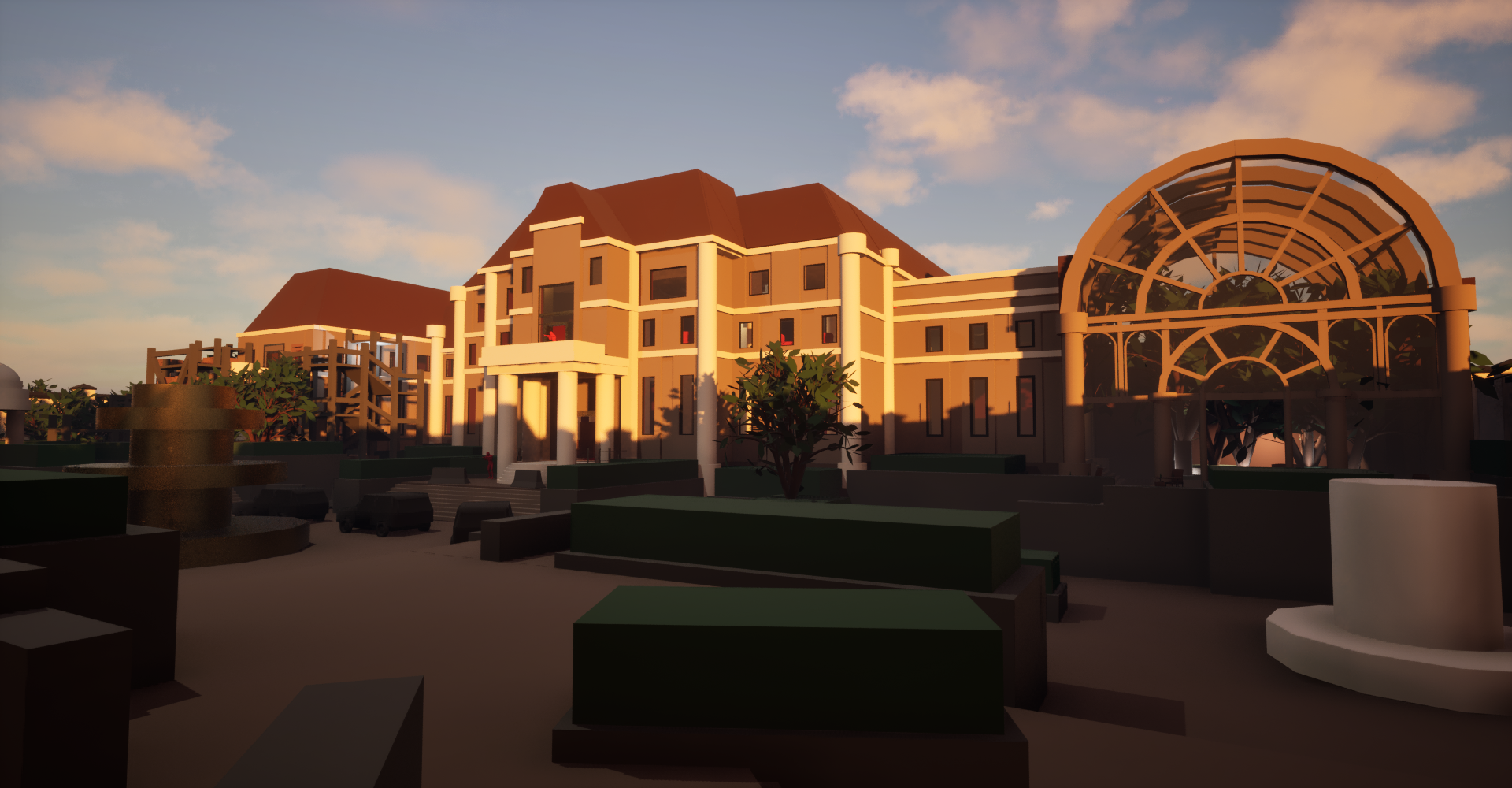
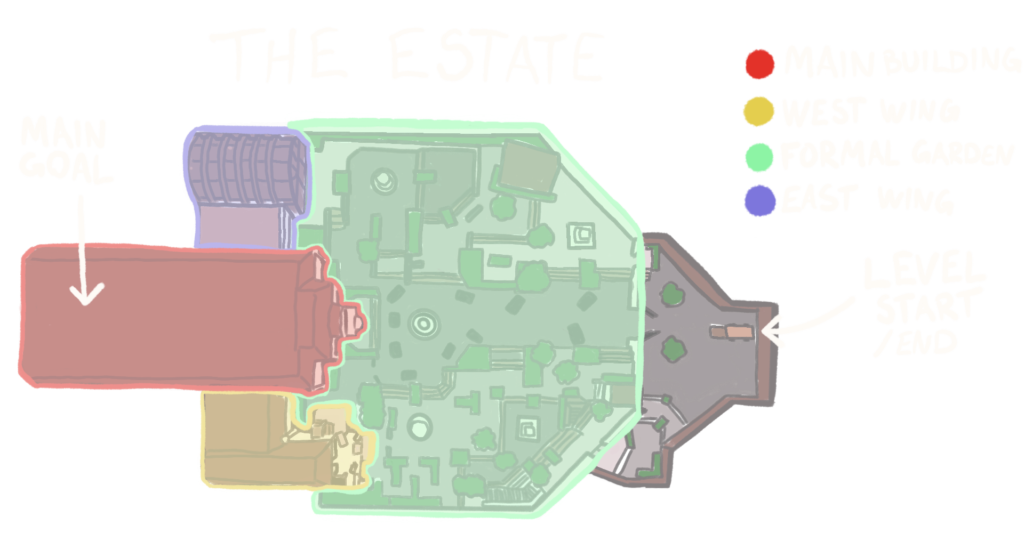
The level takes place at a large estate with a formal garden.
It features multiple player paths that allow for a direct combat route or a passive, stealth route.
The level is divided into two parts.
The first one emphasizes and rewards exploration, and the second part focuses on combat to increase the intensity.
Objectives:
- Locate the syndicate leader
- Dispose of them
- Escape
Designing for multiple play-styles
I believe player agency should be a part of every game, especially linear games where the game doesn’t allow for much creative expression.
In such situations, player agency can be achieved by presenting choices to the player.
The level is linear in that all paths lead to the main objective, but by having diverging and converging paths, the player can easily choose to go stealth and later pivot to full combat, or vice versa.
— Level Breakdown —
Starting slow
The player starts inside a truck where the main objective will be relayed to them.
This serves as a safe space where the player can get their bearings.
Buttons and Electricity
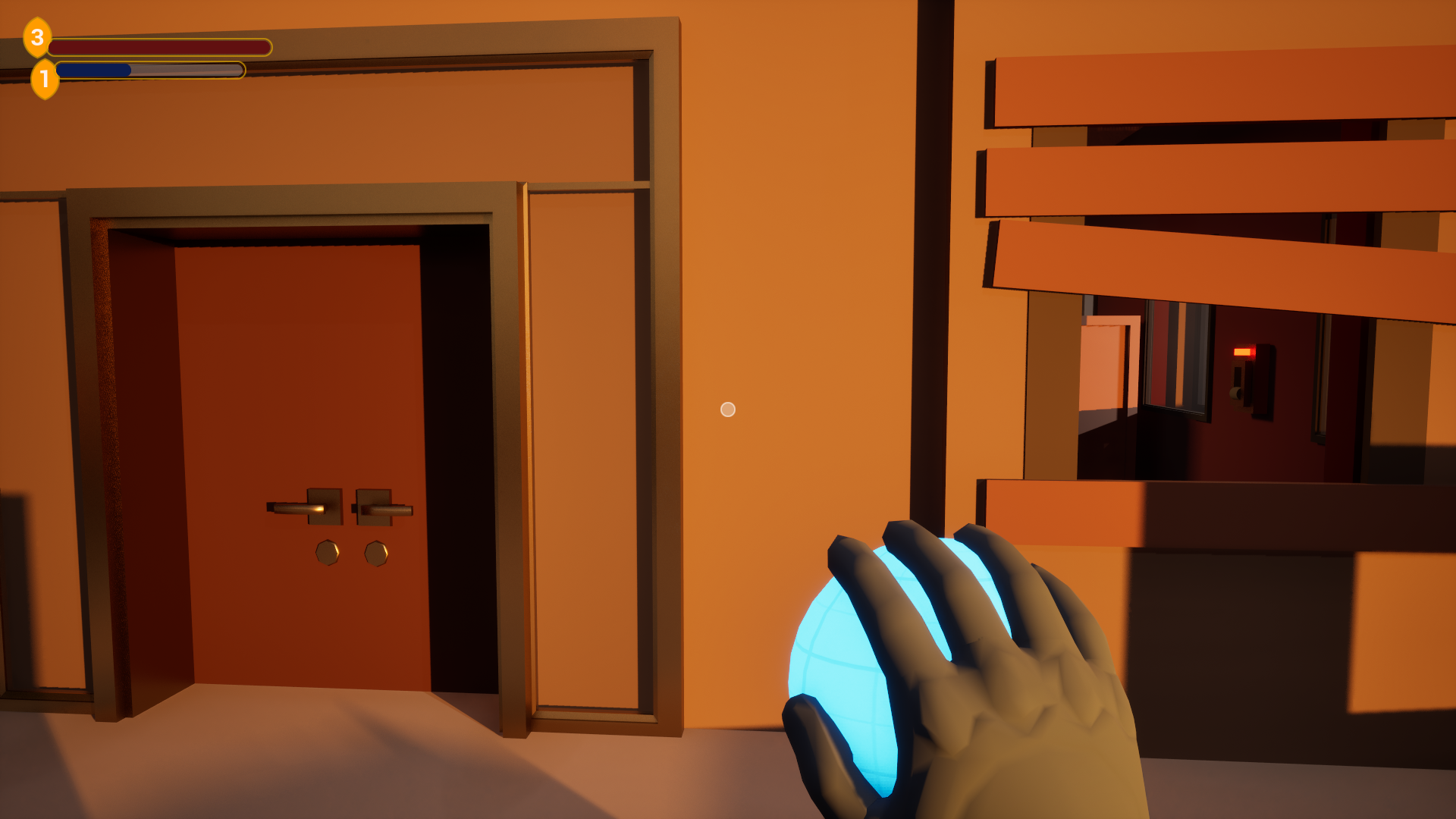
The electro-bolt power can also be used to activate buttons. I made sure to utilize this feature throughout the level.
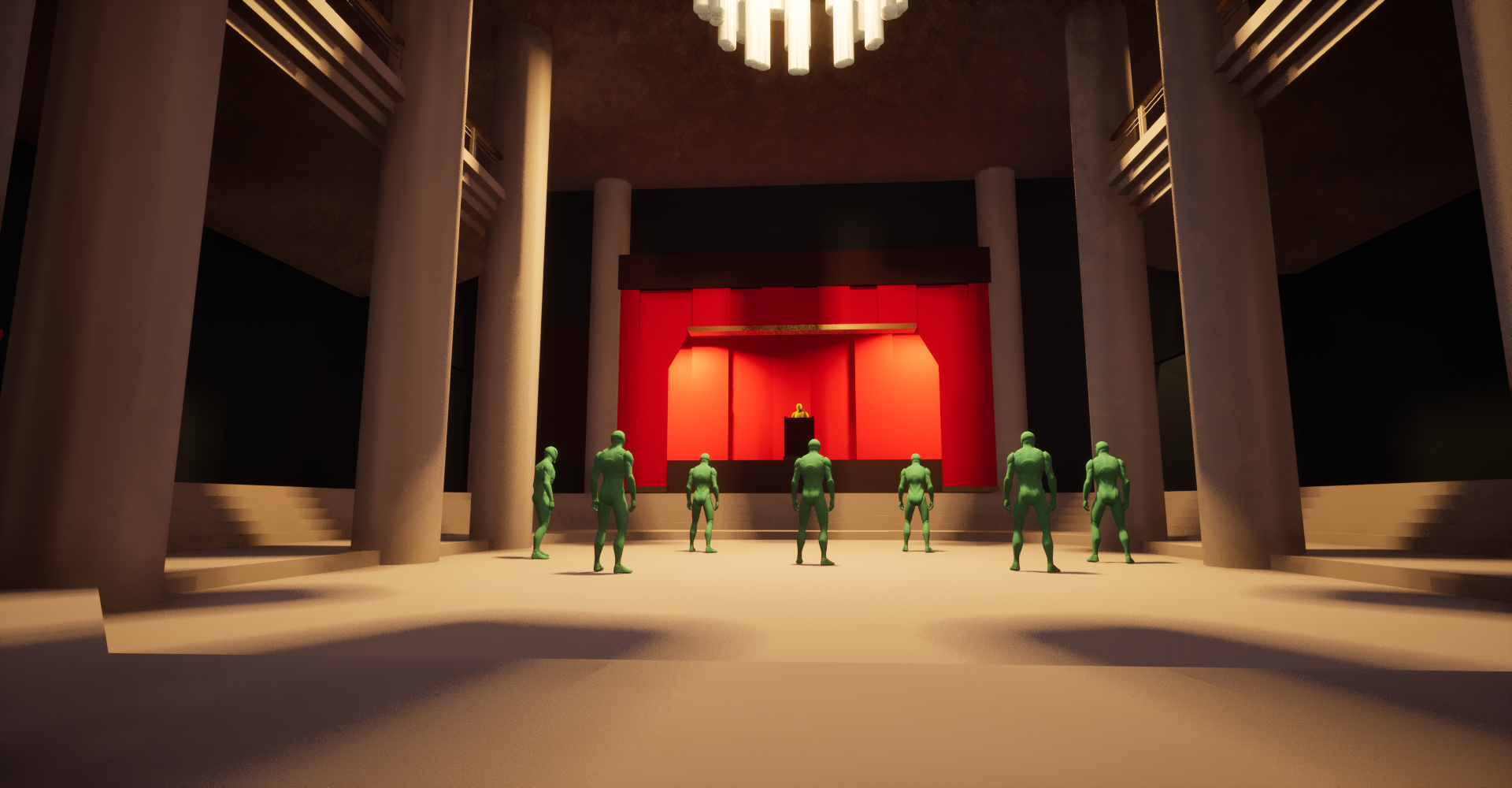
Showing, not telling
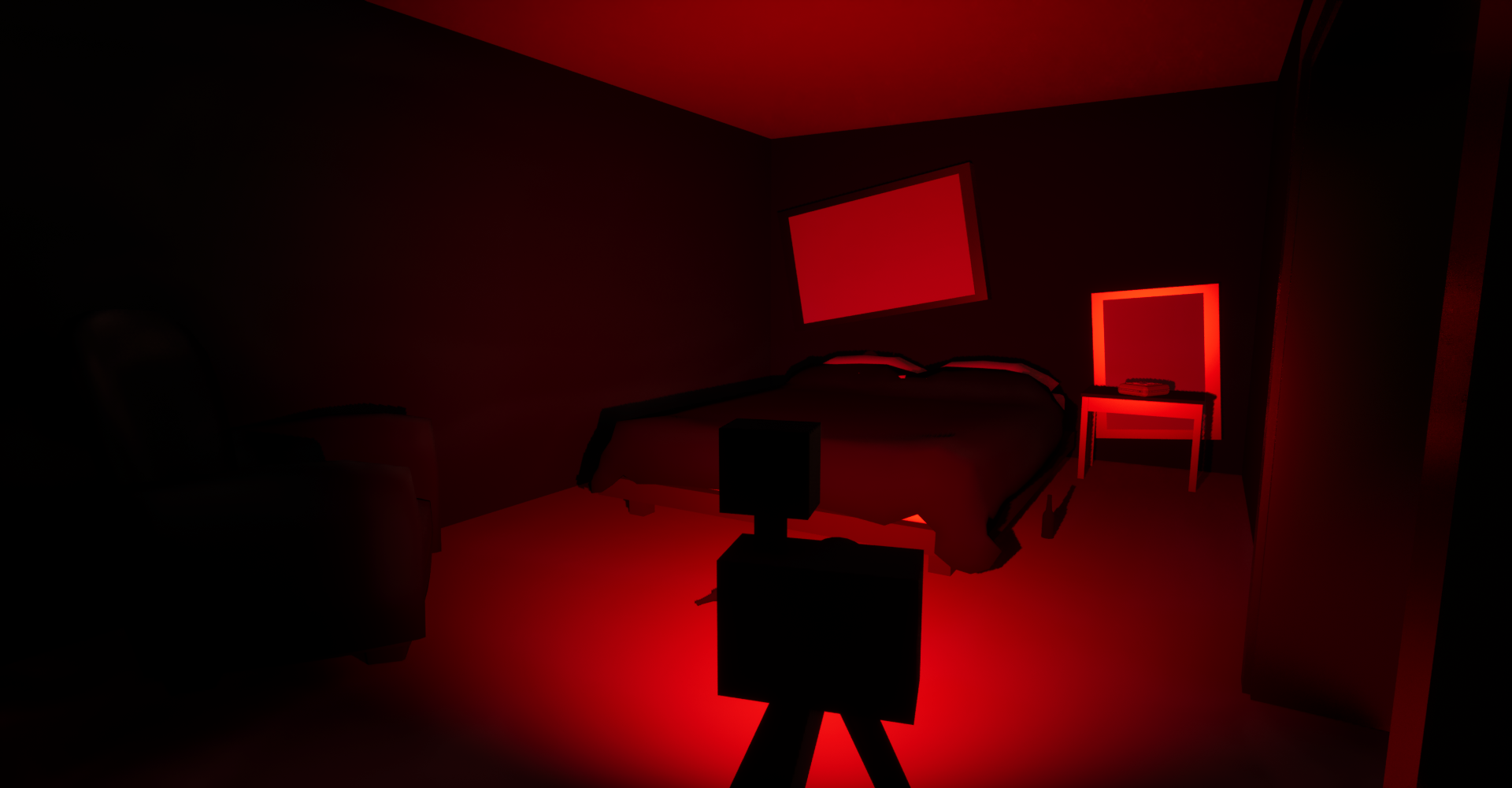
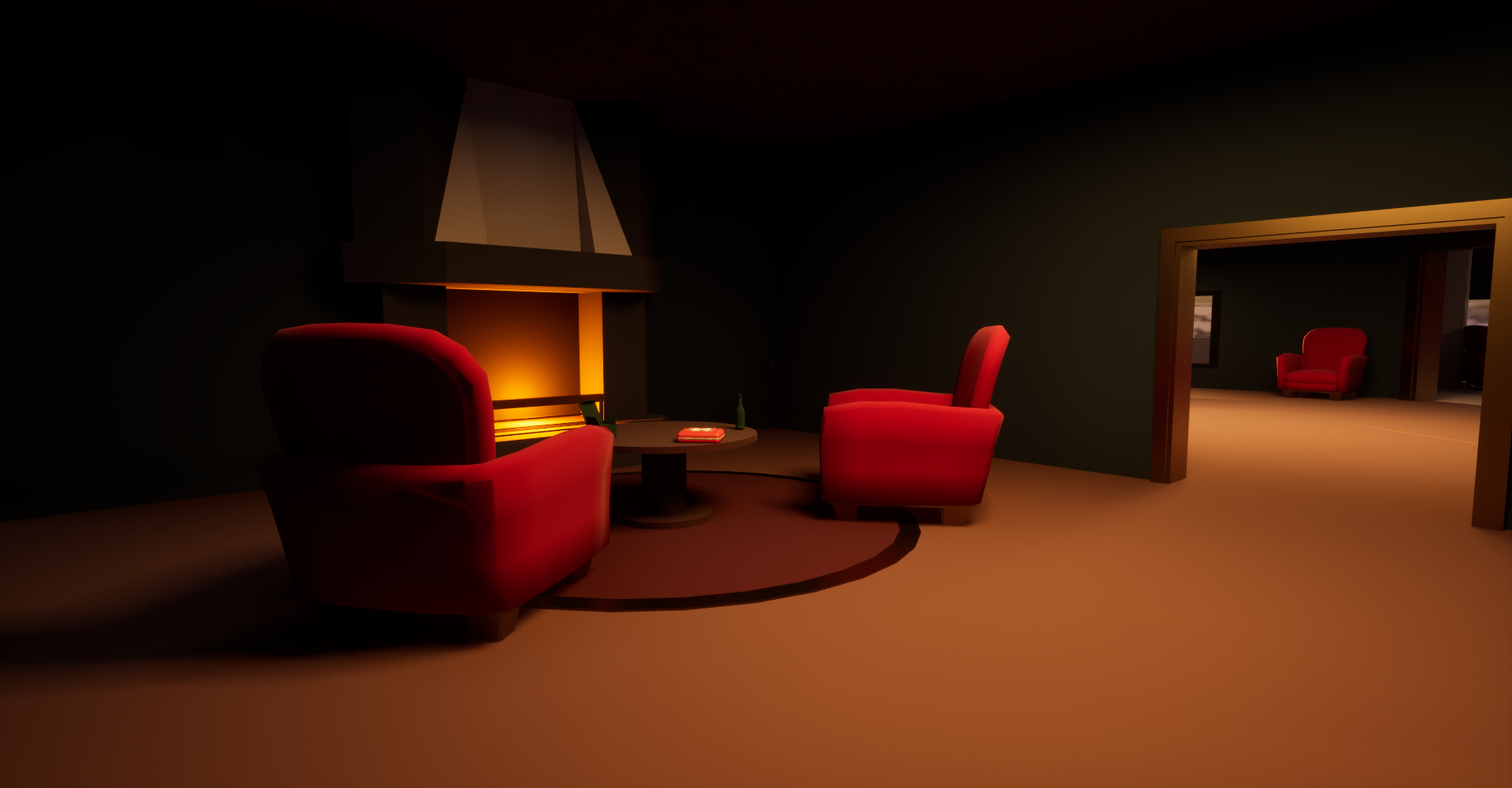
I find it more interesting to discover a story by yourself rather than having it all told to you.
So Instead of overburdening the player with text, I let the environment tell the story.
Variety in the Environment
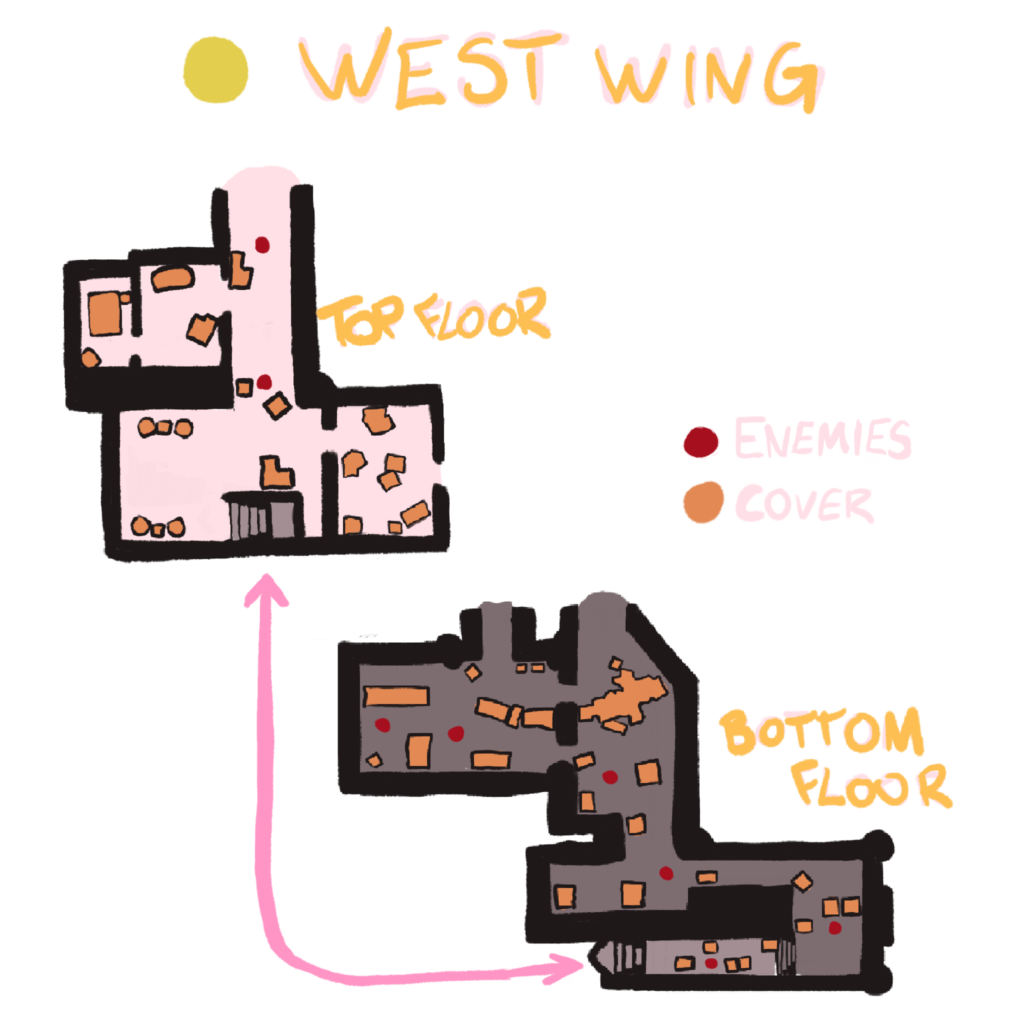
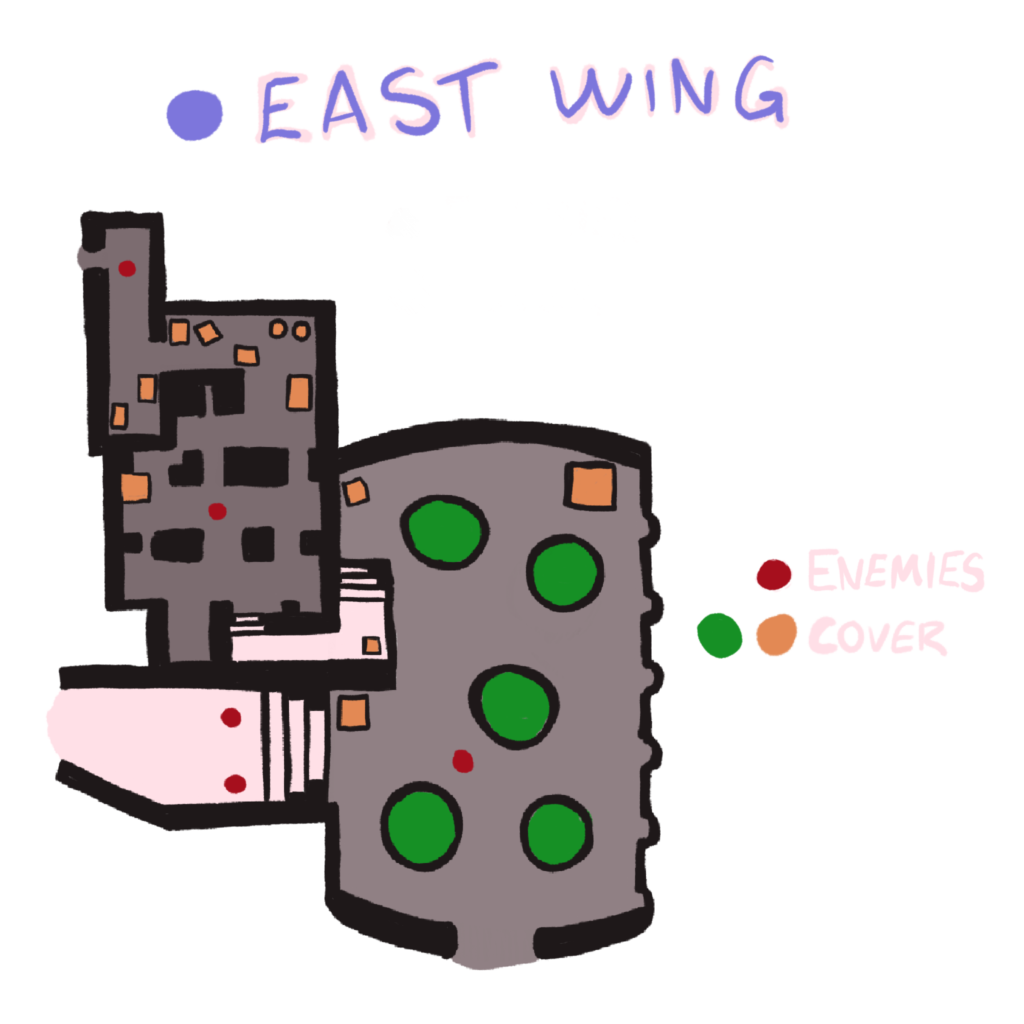
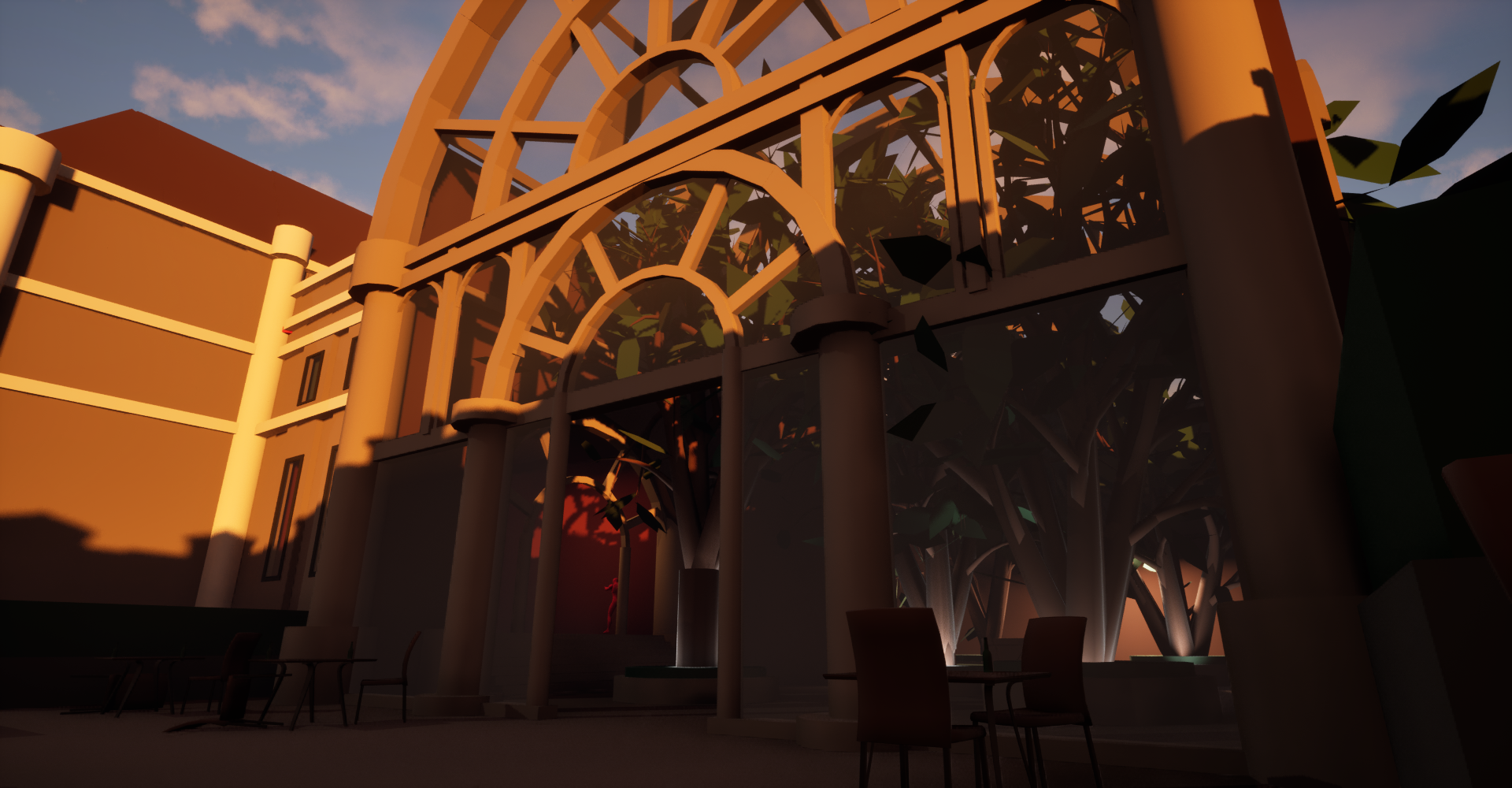
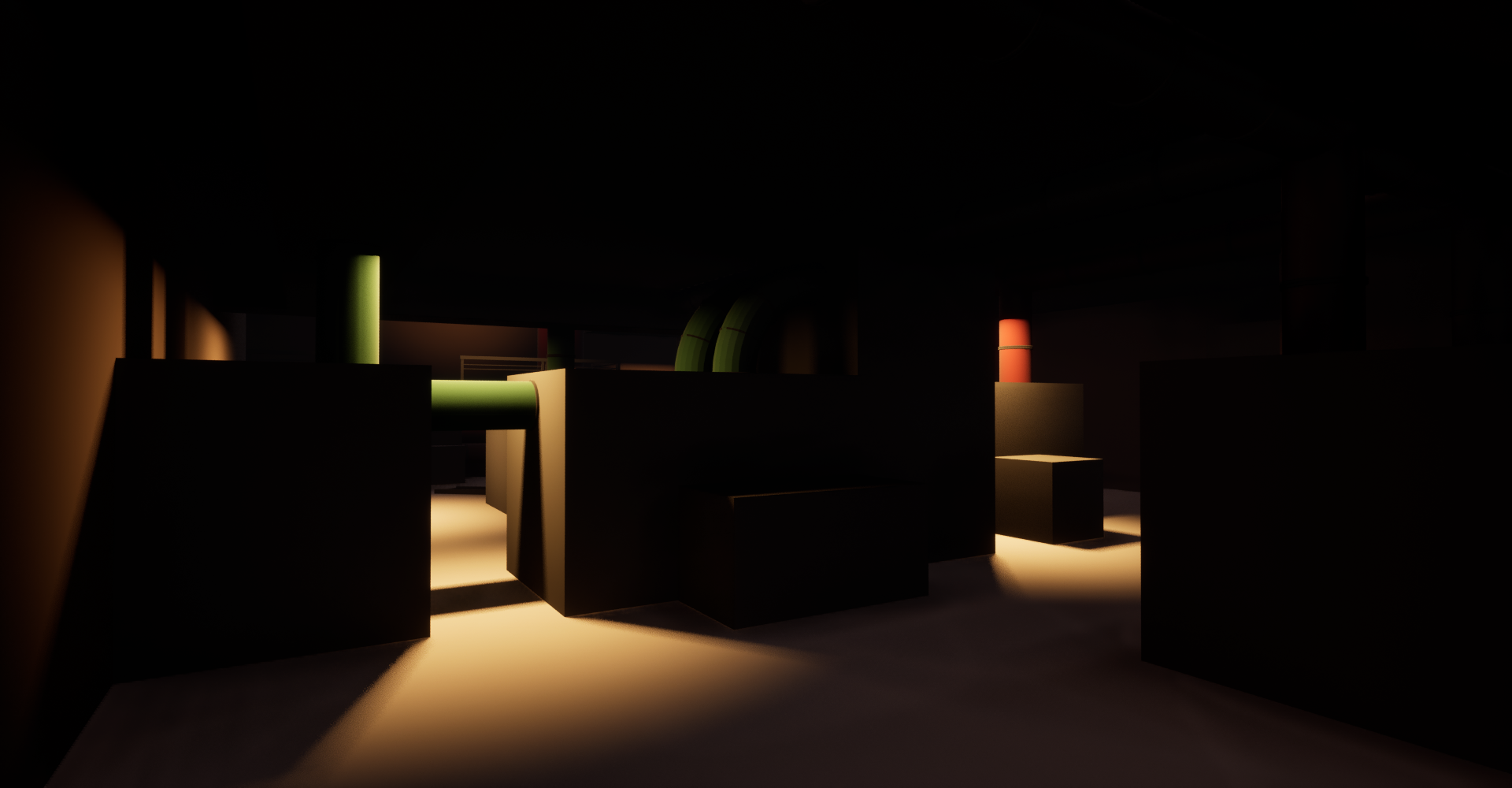
To avoid the estate looking the same, I turned one wing into a greenhouse with a basement.
This not only added some nice asymmetry to the building, but it also made it much easier to navigate the level.
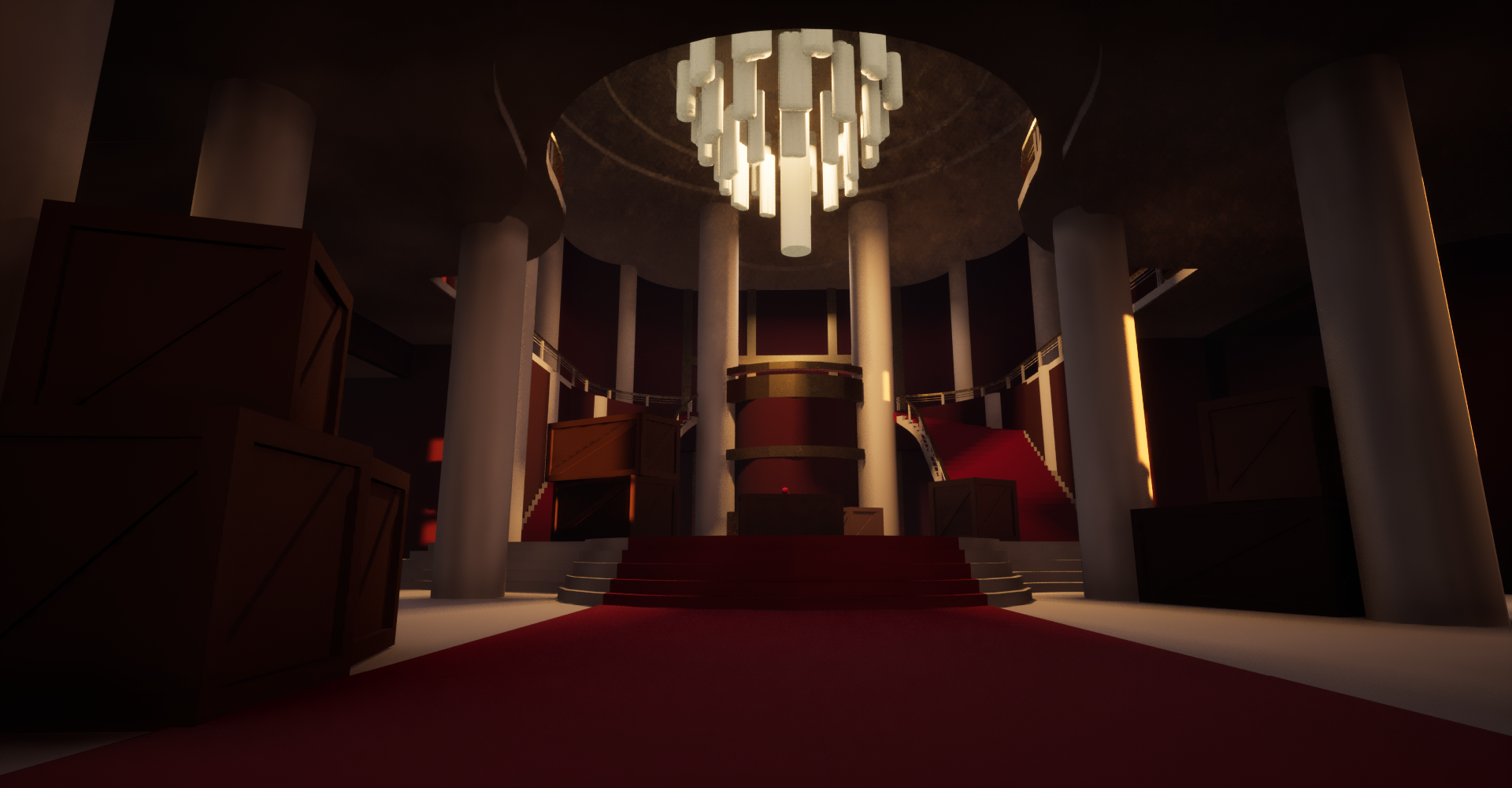
A Grand Entrance
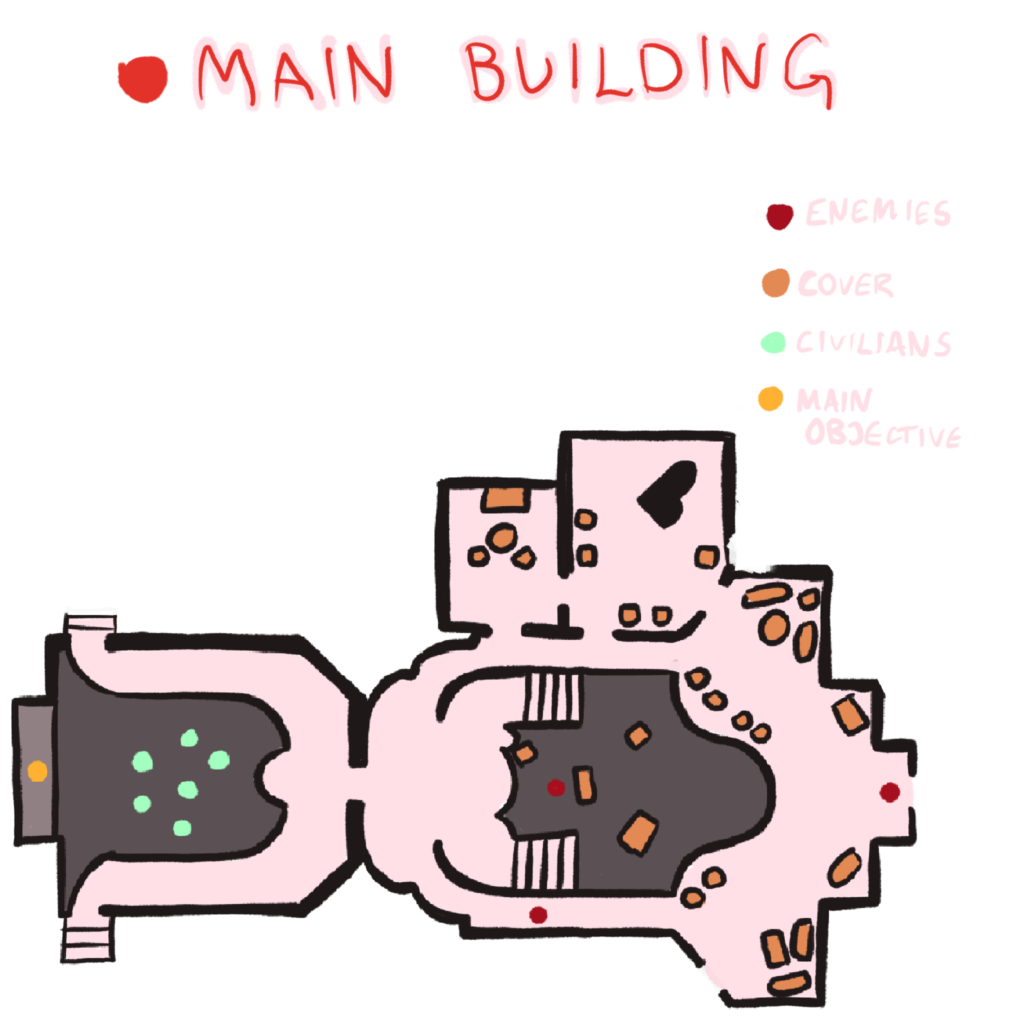
I spent a lot of time planning out the estate so that it made sense layout wise.
I made the center foyer first and let the rest of the estate expand from there.
— Design Process —
Ideation & Iteration
Starting from the not-so beginning
This project was based off of an earlier school assignment, which meant that I had a good foundation to work from.
Updating References
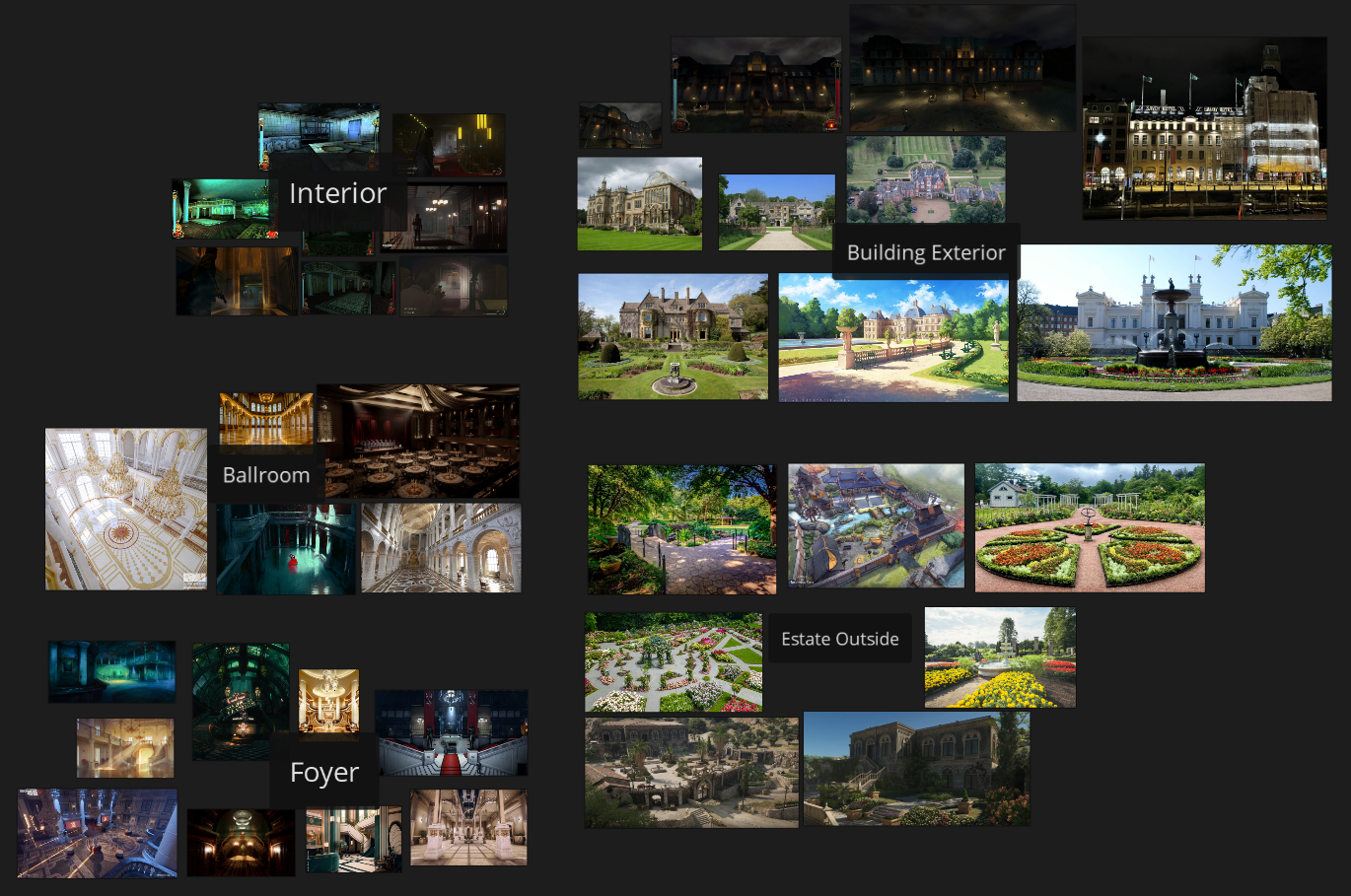
Before starting the block-out, I updated my references and documentation I used previously. This gave me a rough idea of what I wanted to change in the level.
It also reminded me of some things that didn’t work out as well in my previous iteration.
Pre-Blockout Design
Once I had collected enough references, I made a rough overview of the level.
This gave me a much clearer picture of what I had in mind.
Even though references helps with this process, I feel that I get a much clearer path forward in my creative process when I sketch out the general idea of the level.
Blockout Process
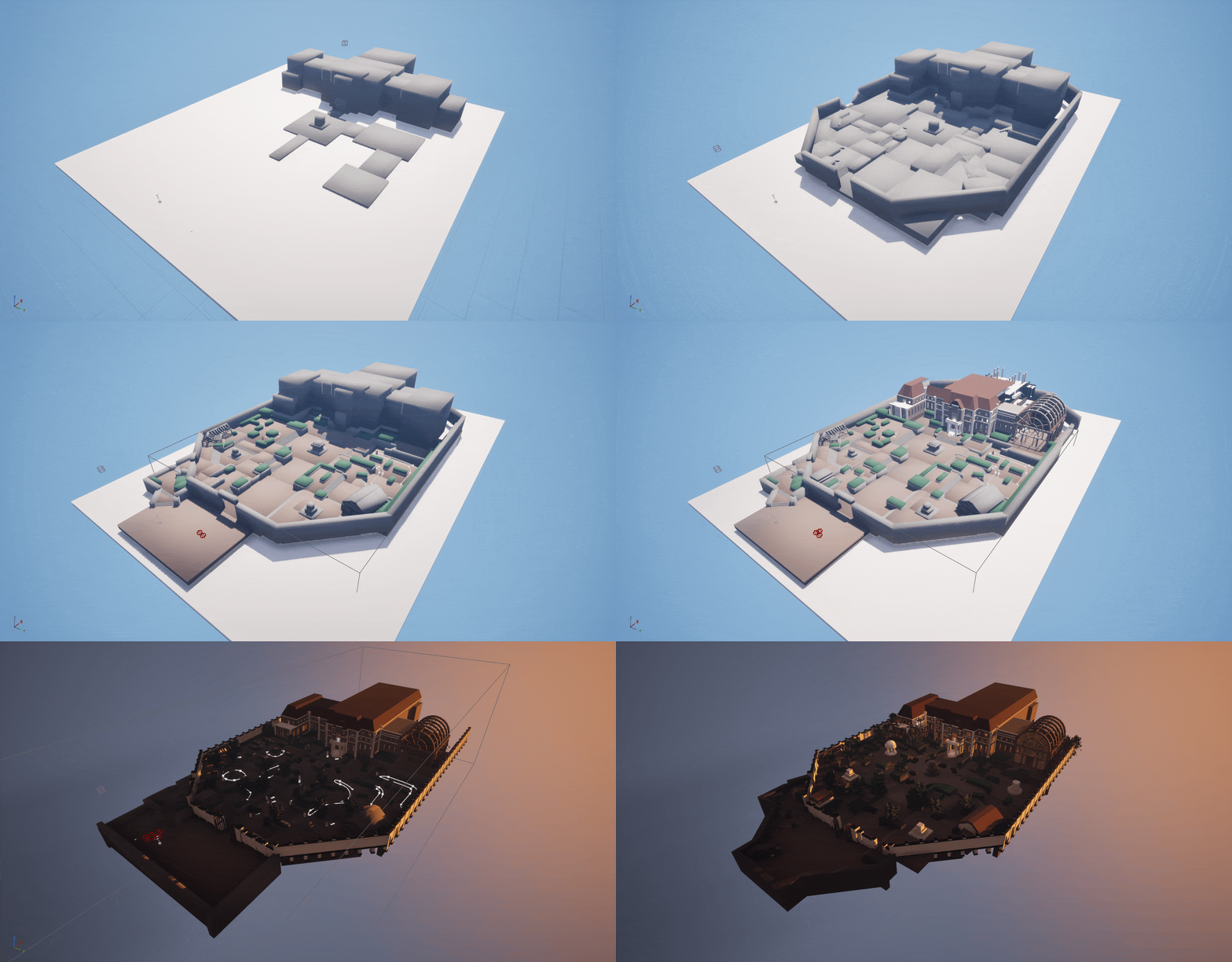
I started defining the layout using basic cubes to get the general shape and size of the level.
When the shape felt good enough, I implemented elevation and secondary shapes.
I then added tertiary shapes and definition to the medium-larger shapes.
Finally, I added decorations, covers, enemy paths and pickups to the level.
— A Level in Two parts —
Exploration & Shakeup
The way a player experiences this level is divided into two parts;
Exploration & Discovery, and Shakeup & Twist, with each part focusing on different aspects of the level.
Exploration
By allowing the player to pick their engagement, the first part of the level is to let the player control the intensity by giving them the choice of stealth or combat.
I made sure to let the player have enough breathing room between each choice of action to regroup and refocus themselves.
Rewarding Discovery
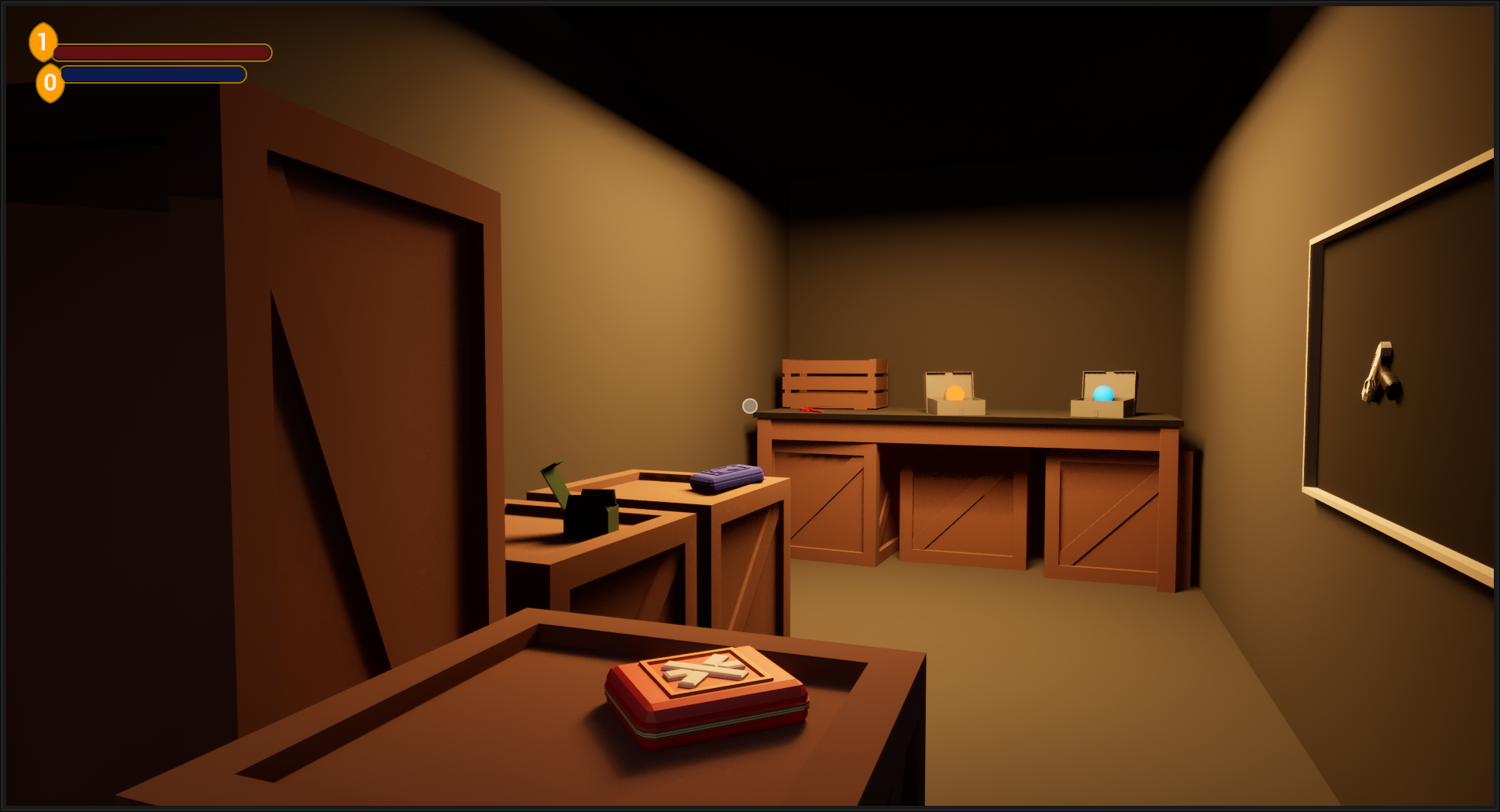
To encourage the player to want to explore the level, I made sure to reward the player with extra ammunition, weapons and supplies at places off of the main path.
Varied layouts and unique meshes served as a secondary visual reward for the player.
Part 2: Shakeup & Twist
Shakeup
When the player completes the main objective, the experience transitions into the second stage.
The level turns into a more combat focused experience as the player needs to fight their way back to the start.
Subverting Expectations
I added a sequencer that changes the layout of the estate.
Exits that were previously open are now closed, and the player gets funneled through the same rooms they’ve previously explored in a linear fashion.
By allowing the player to explore the level in their own pace before the “shakeup”, I can throw in a wrench in their plans by blocking off obvious routes.
This also adds some much needed variation and tension to the level.
— Feedback —
Playtest & Adjustment
Gaining advantage
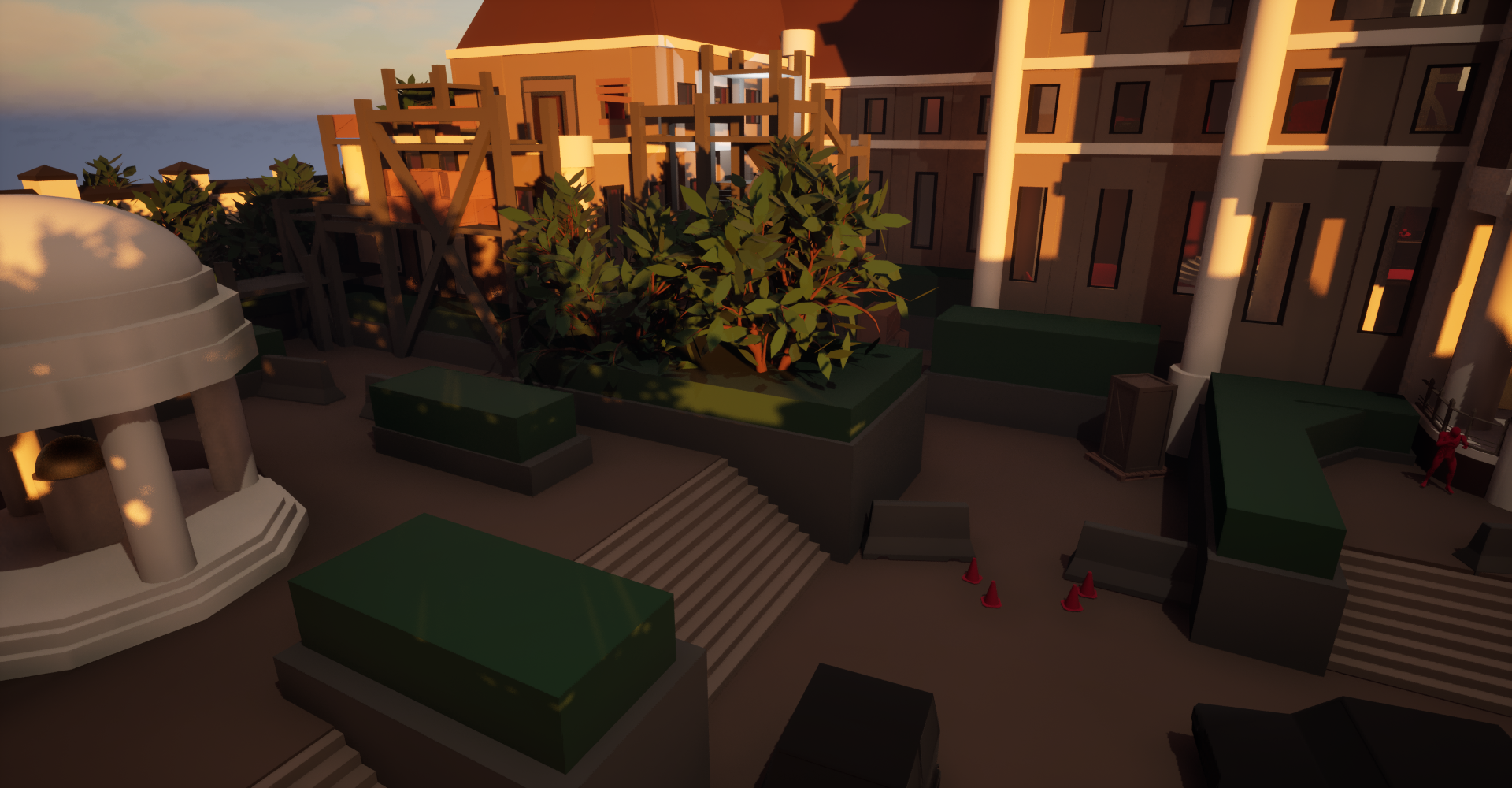
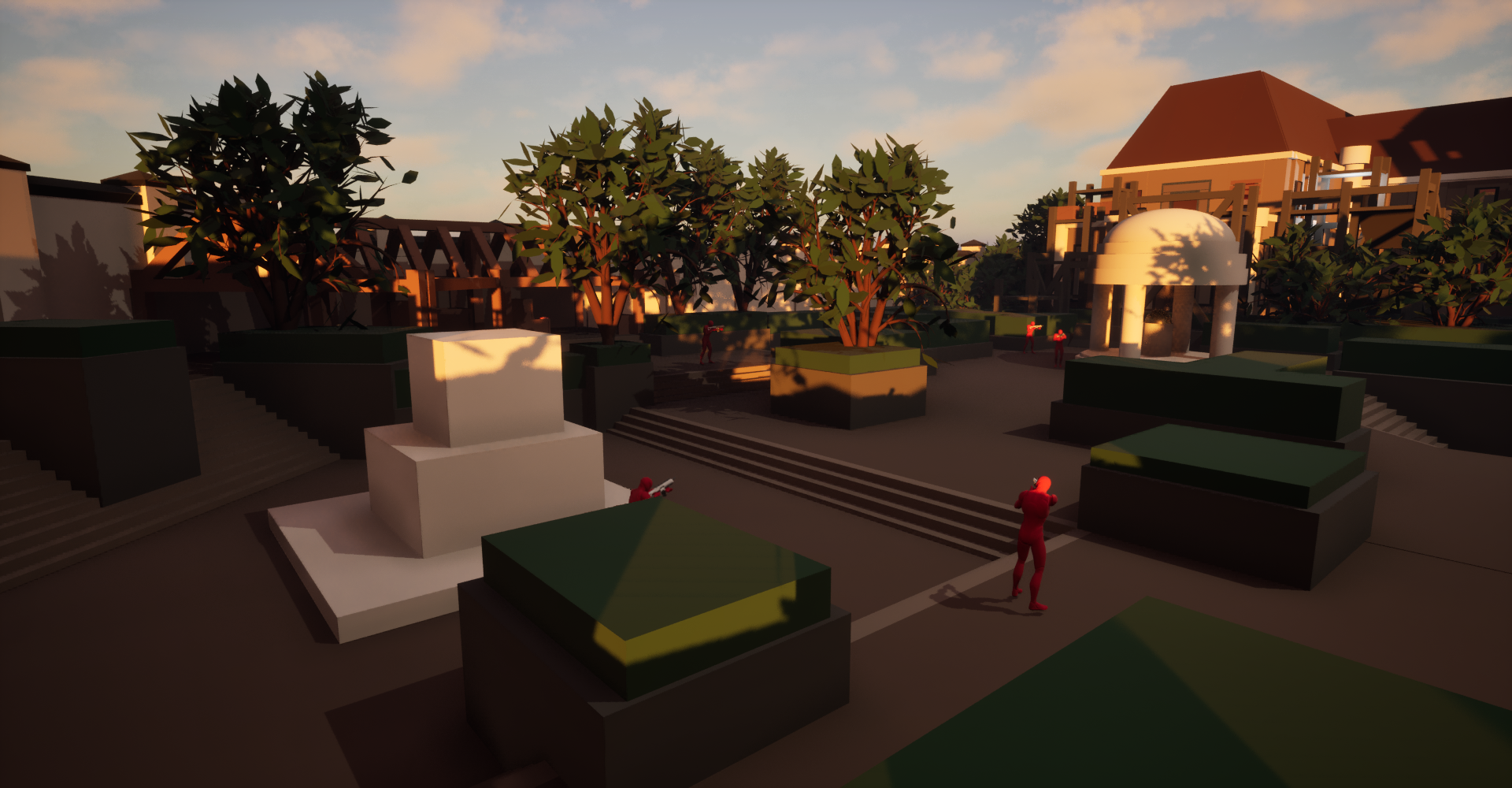
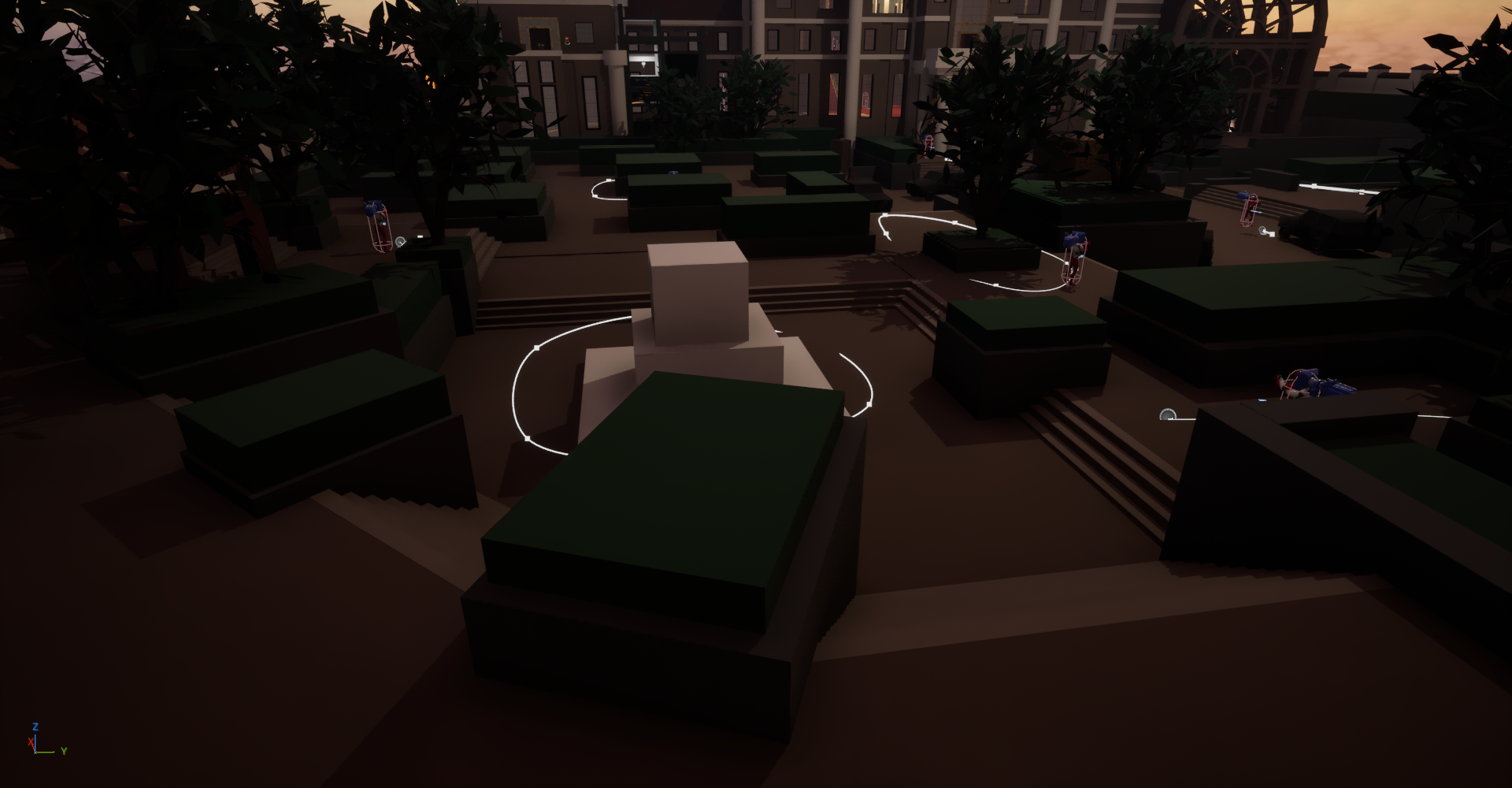
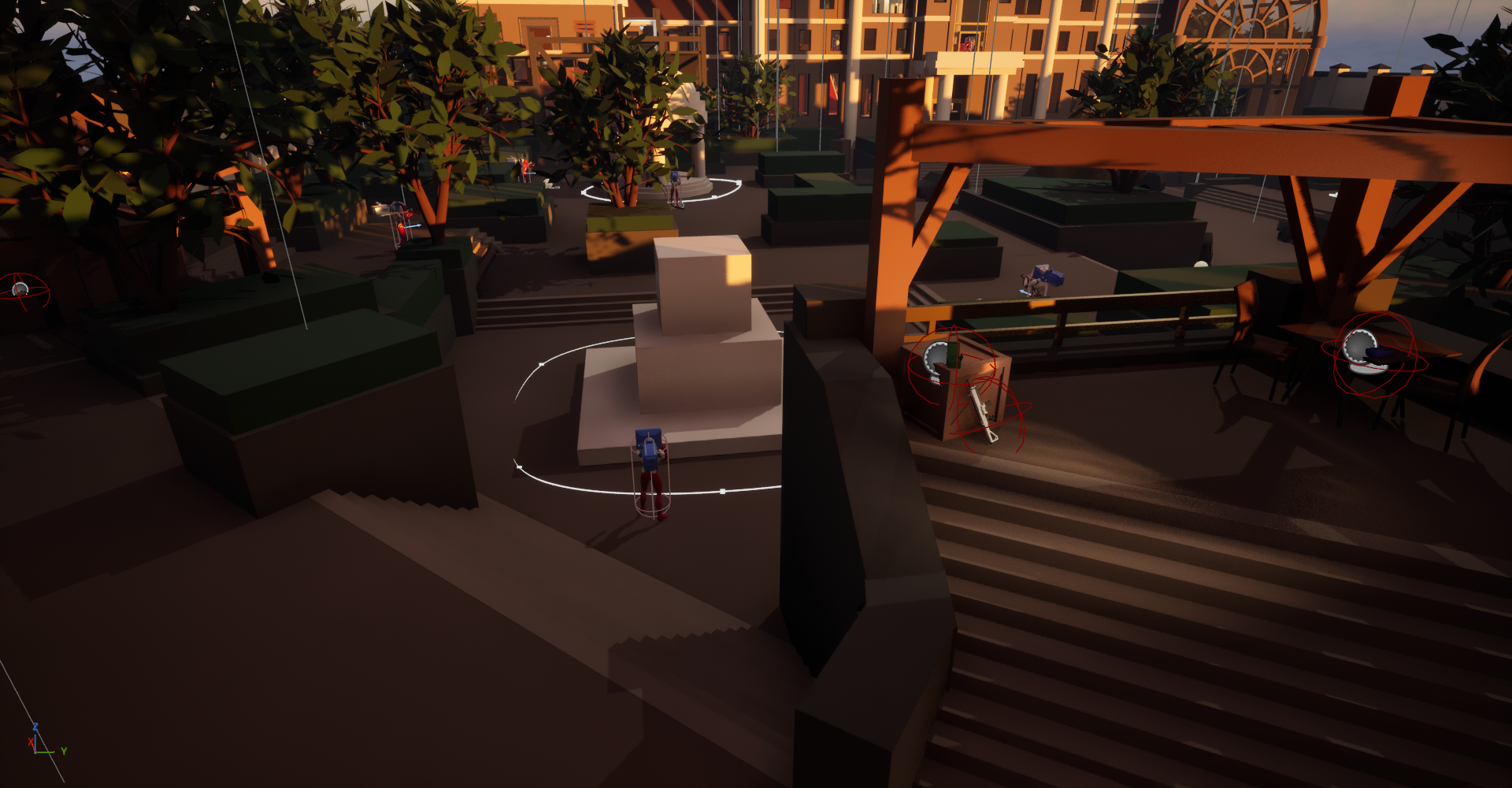
Players got frustrated due to not knowing where all the enemies in the garden area were.
I added an elevated lookout point so the player can get a clearer view of the area. To make the place more interesting for a player to get to, I adjusted the lightning and added a rifle-pickup.
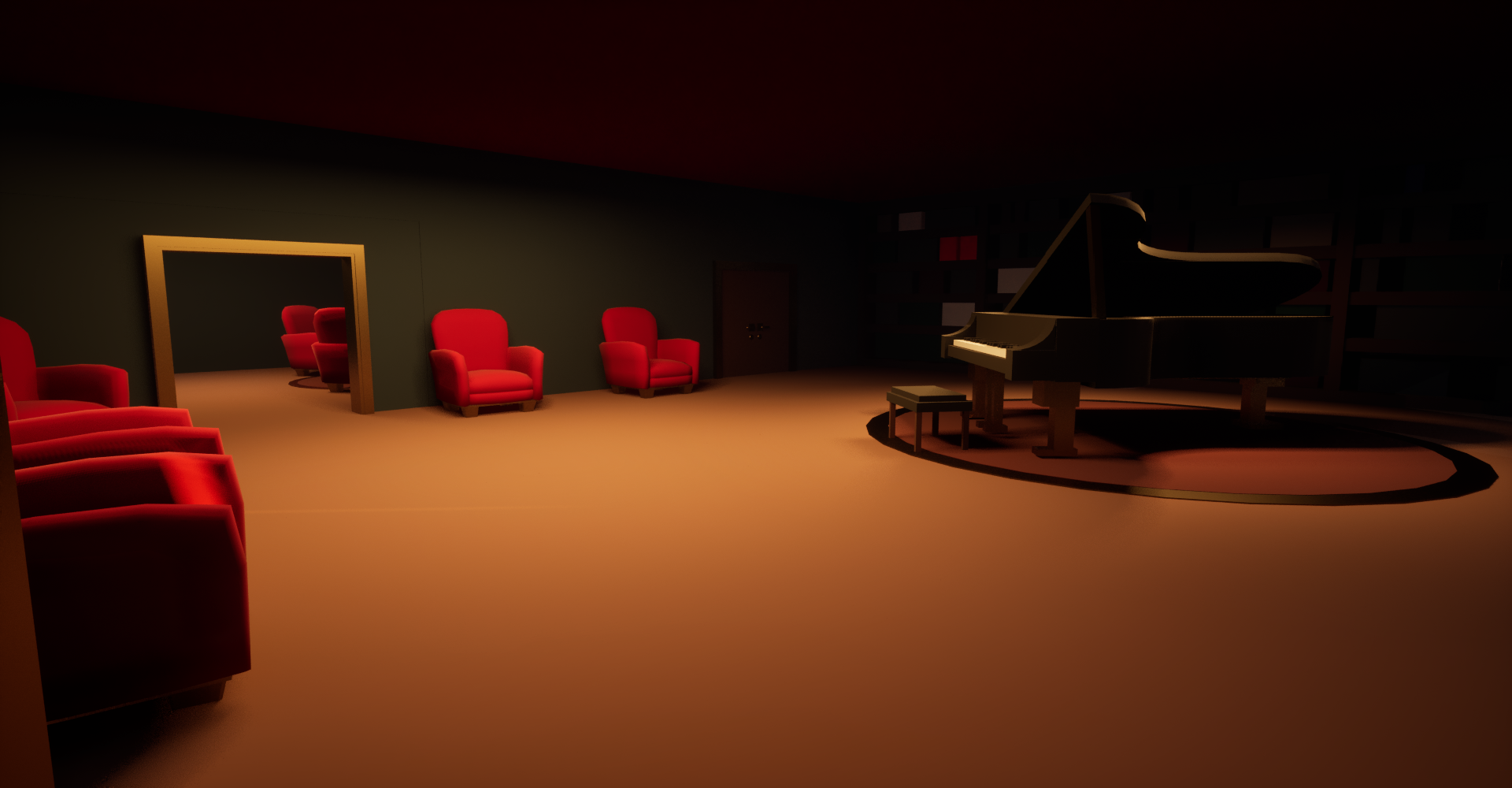
Giving Each Room a Purpose
A few of the rooms in the estate wasn’t decorated at all, which caused a lot of frustration and confusion for the player.
Why have the room at all if it’s just an empty space?
I made sure to add a purpose to each room. This made it much easier for the player to get their bearings when inside.
— Example Playthrough —
This video features an example of how a playthrough of the level can look like.
For this video, I’ve chosen a more stealth-focused approach.
The general idea of the level is to feature multiple differing paths through the level. It is absolutely possible to make a more combat-oriented approach should one desire.
— Reflection —
I am very happy with how this piece turned out. Being able to make another iteration on a previous assignment and give it that extra polish that was missing from the first version was such a rewarding experience.
The main goal I wanted to deliver upon was multiple and converging player paths, and I feel like I managed to accomplish that in this level. I have learned a lot in regards to designing a more open-ended experience in general.
If I had more time to develop this piece further, I would change it up more in the second part to really increase the intensity.
Adding a roof-collapse, fire effects or even a more intricate sequence would have done wonders.
Thank you for reading!